Capability

Custom packaging: polybags, boxes, tissue, stickers.

Production
Selected projects from 50 pieces
Hands folding a black T-shirt into a kraft mailer box lined with tissue paper

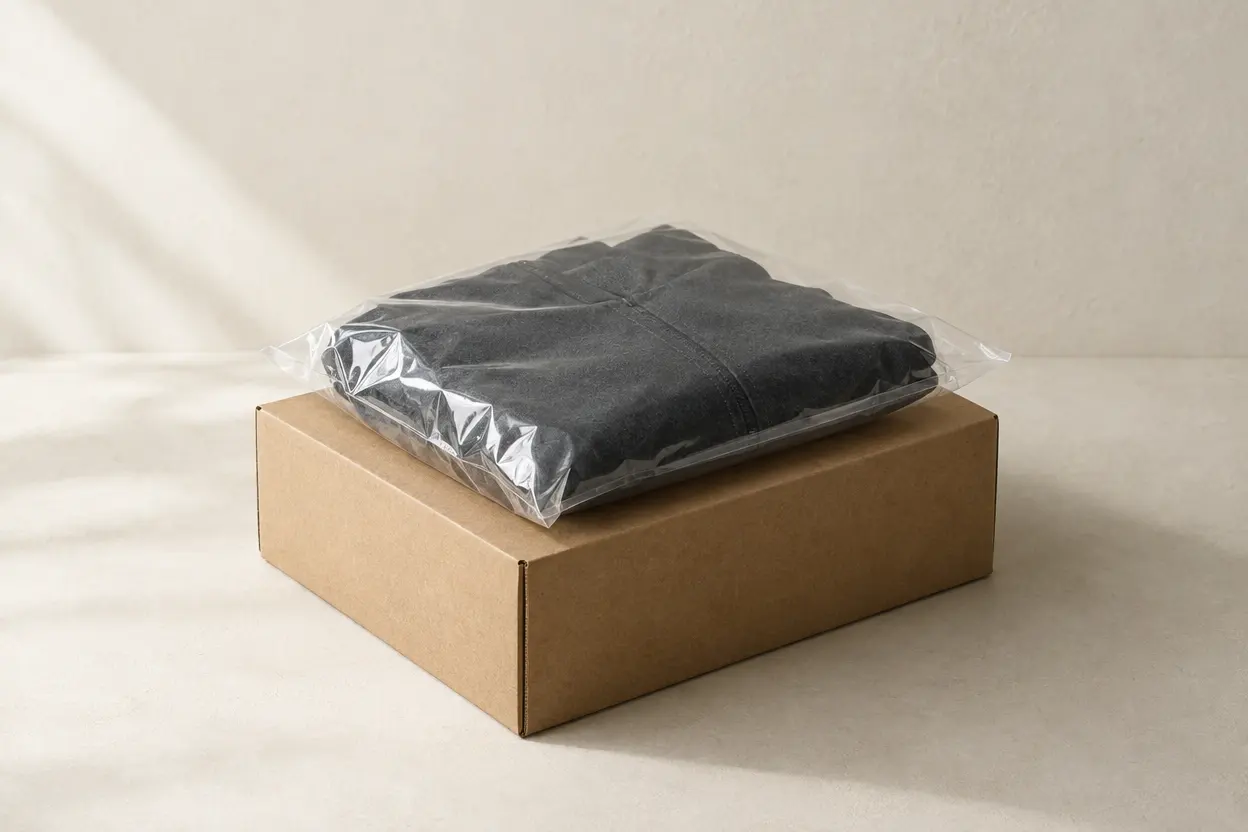
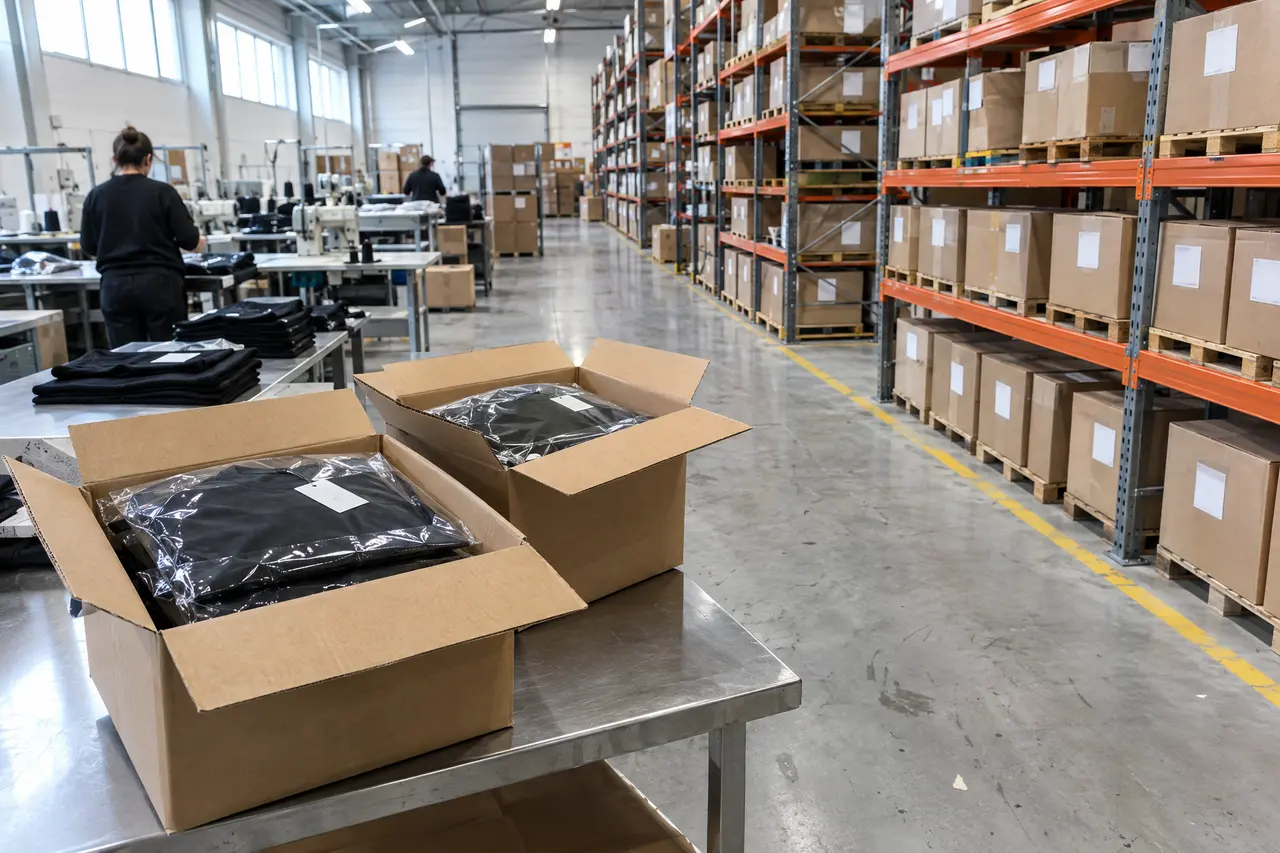
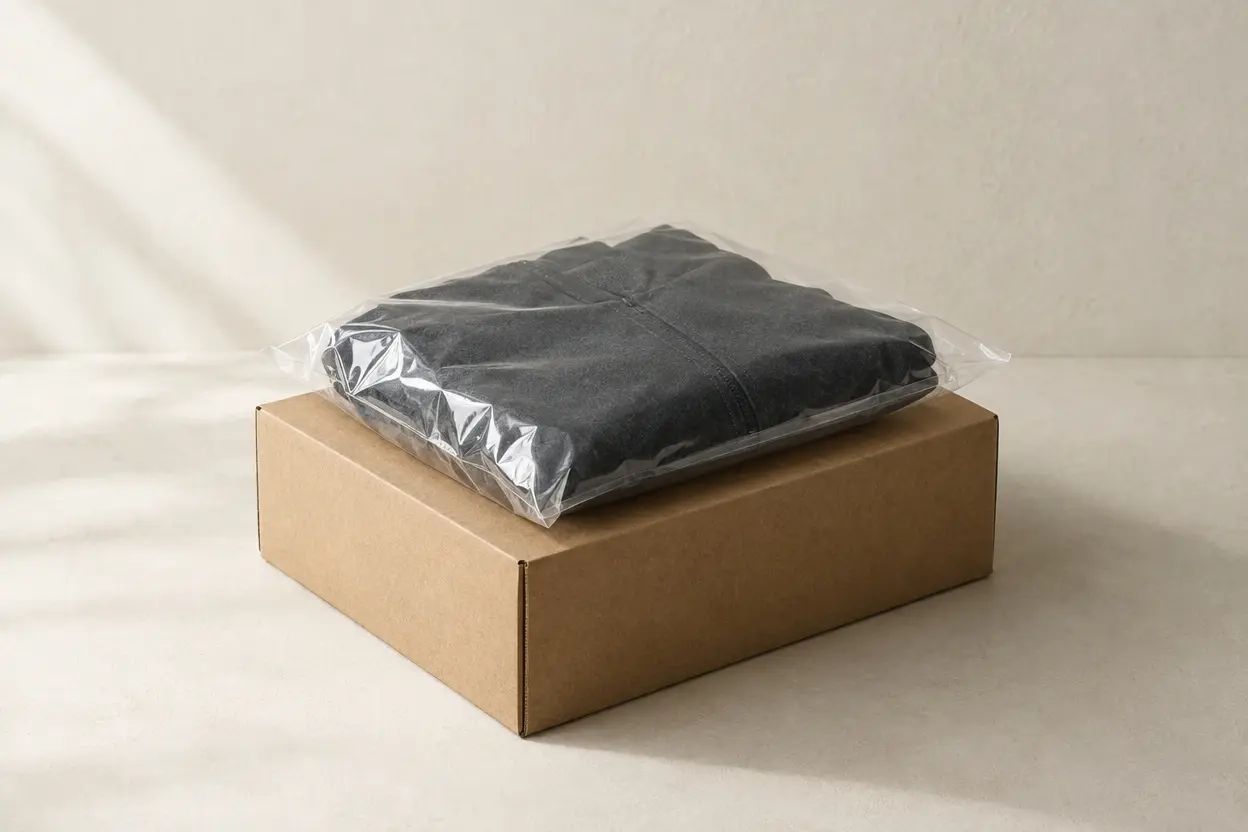
Branded polybags with the required suffocation warning, folding cartons, tissue paper, and stickers, specified together with your hangtag and label order so everything arrives matching.

Options
Polybags, folding cartons, tissue, stickers
Compliance
Suffocation warning per destination market

In detail

  1. 01

    Polybag thickness and warning wording follow the requirements of your destination market;

Production from

50 pieces per style

Every quote

Written, priced per piece

Before bulk

You approve a sample

Custom packaging that protects the garment and carries your brand to the customer

Packaging is the last thing that happens to a garment before it reaches your customer, and it is often the first thing they see. Custom packaging covers the polybags, boxes, mailers, tissue, stickers, cartons and inserts that hold and present your product. Done well, it protects the garment in transit, makes storage and handling easier, supports your brand and can reduce returns caused by damage.

This page explains the main packaging types, what each is used for, how packaging is planned alongside the garment, what to consider on materials and sustainability, how artwork and sizes are agreed and how sampling and approval work. It is written for brand owners and buyers who want packaging that fits both the product and the sales channel. We arrange custom packaging as part of a complete garment order.
Have a design or an idea?

Send it and get a written quote.

Request a quote

The main packaging types

Packaging works at several levels, from the individual garment to the shipping carton.

  • Polybags protective bags for individual garments, often with a warning label and a sticker.
  • Tissue and wraps for a considered unboxing feel on gift or brand-led products.
  • Boxes and mailers retail or e-commerce packaging that carries your branding.
  • Inserts and cards thank-you notes, care information or brand story.
  • Master cartons the outer boxes used to ship garments in bulk, with carton marks and labels.

The right combination depends on how your product is sold: in stores, online or to other businesses.

Planning packaging with the garment

Packaging should be planned at the same time as the garment, not after it. The folded size of a garment decides the size of the bag or box, and a change in garment thickness can change the carton count. We plan folding method, bag size and carton configuration together, so garments fit properly and do not arrive creased.

We also consider how the packed garment will be stored and shipped. For stores, the packaging may need a hangtag hole or a barcode window. For online sellers, mailers that fit the folded garment reduce shipping volume. We discuss these practical points with you early.

Materials and sustainability

Packaging materials affect cost, protection, appearance and environmental impact. Polybags can be made from different plastics, including recycled content, and paper alternatives exist for some uses. Cartons can be made from recycled board. Each choice has trade-offs, such as strength, moisture protection and cost.

We will not make environmental claims about packaging that cannot be verified. If you want to use a statement such as recycled content, we ask for the supporting information from the packaging supplier, and we recommend phrasing that is accurate and specific. We also point out where packaging can be reduced without hurting protection, since less packaging usually means less cost and less waste.

See the garment before you commit.

Order a physical sample in your fabric and fit. Bulk production starts only after you approve it.

Artwork, sizes and finishes

Send your logo and packaging artwork as vector or high-resolution files, with colour references. For printed bags, boxes and mailers, we advise on how colour and finish behave on each material, since colour on plastic or kraft paper looks different from colour on white card.

We agree sizes with you based on the folded garment and the way it is sold. Finishes such as matte, gloss, embossing or foil are possible on some items, and we advise on their cost and effect. For carton marks and shipping labels, we confirm the information needed, such as style, size, quantity and destination, so that cartons can be identified and handled correctly.

Protection and handling

Good packaging does its job quietly. Garments should arrive clean, dry and uncreased. Polybags should be closed in a way that avoids suffocation risk, and warning text is added where required, especially for children's products. Cartons should be strong enough for the weight and sealed properly.

If your garments are light-coloured or delicate, tell us, because we can add tissue or separate layers to avoid transfer or marking. If you sell through retailers, check whether they have specific packaging or labelling requirements, and tell us so we can build them in.

Quantities, sampling and approval

Custom packaging is made to your artwork and size, so minimum quantities apply, and they vary by item and material. We tell you the minimum early in the process. Made-to-order garments start from 50 pieces per style, and packaging is planned together with the garment, the labels and the hangtags.

Before bulk, we recommend a sample garment packed in the real packaging, so you can check fit, appearance, protection and handling. Approve it in writing, and it becomes the reference for the run. Our private labelling and hangtags and barcodes pages describe the neighbouring steps.

Send us your packaging brief

Tell us the product, how it is sold, the packaging you have in mind, your artwork and the quantity. We will respond in writing with a packaging plan, what we need to confirm and how the sample step works. We sell to business customers only, and we will say clearly if something you have in mind needs a different approach.

Process

From first message to delivery.

Six steps, each confirmed in writing. Nothing goes into bulk production before you approve the sample.

  1. 01

    Enquiry

    Send your idea, tech pack or a reference garment through the quote form or by email.

    Day 1

  2. 02

    Quote and tech pack

    We confirm fabric, sizes, decoration and price per piece in writing.

  3. 03

    Sample

    A physical sample in your fabric and fit, sent to you for review.

  4. 04

    Approval

    You approve the sample or request changes. Bulk production starts only after your approval.

  5. 05

    Production and quality checks

    Bulk production with quality checks against the approved sample.

  6. 06

    Delivery

    Packed to your specification and shipped to your delivery address.

Inventory

Need garments now? Buy from inventory.

  • From 1 piece, any size or colour
  • Ready garments in our German warehouse
  • Live piece counts per size and colour
  • One quote request for the whole basket

Production

Your own design? Produce with us.

  • Selected projects from 50 pieces
  • Start from a sketch, tech pack or reference garment
  • Physical sample before bulk production
  • Every step confirmed in writing

Talk to us

Tell us what you need

Two lines are enough to start. A person on our team reads every message and replies in writing. We reply in writing within 24 hours.

Need to give quantities and a product category? Request a quote

Send us your brief. Get a clear answer.

Quantity, fabric, decoration and timeline. We confirm in writing what is possible, what it costs per piece and when it ships.