
Company

Traceability.

Traceability

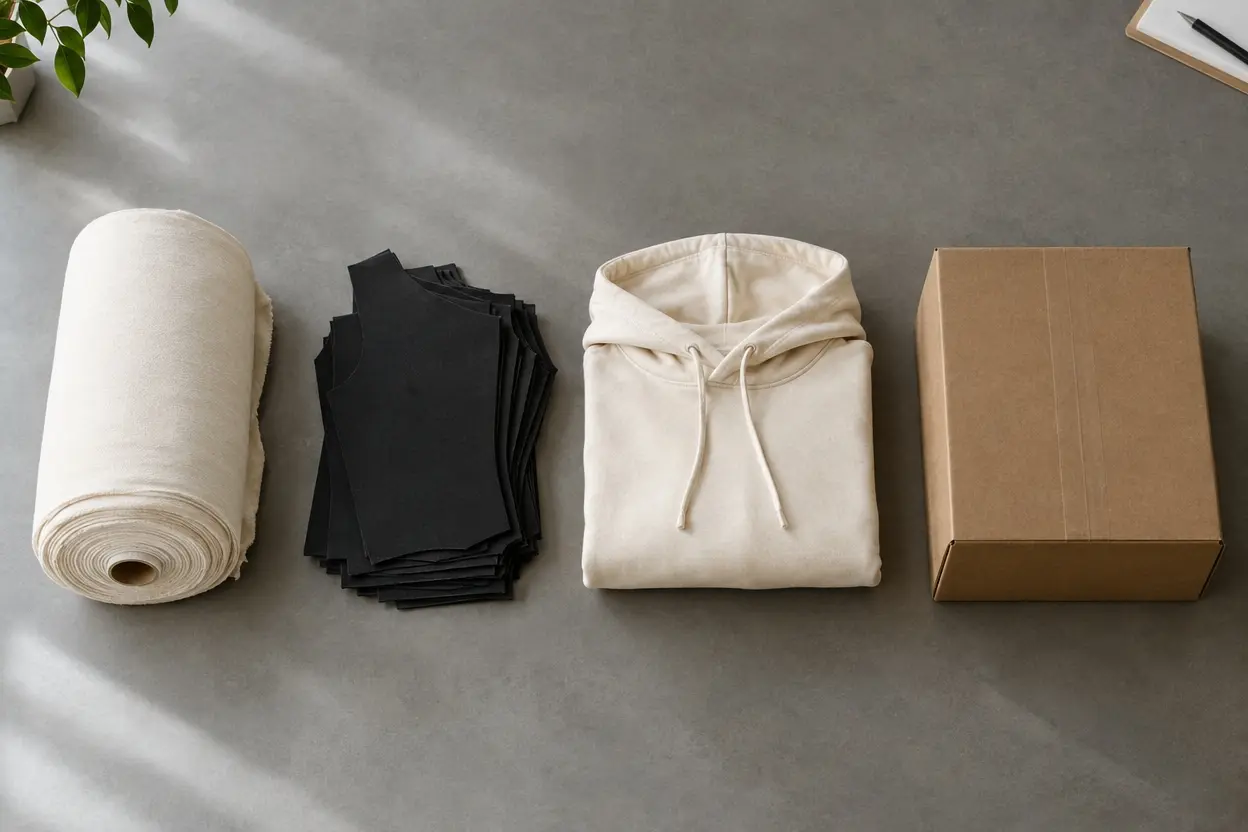
Every cut lot is bundled and numbered (see the cutting capability page), and every stock item carries a product identifier, so a garment can be traced back through production or, for stock, back to its import record.

Cut lots
Bundled and numbered
Stock items
Carry a product identifier

In detail

  1. 01

Production from

50 pieces per style

Every quote

Written, priced per piece

Before bulk

You approve a sample

Traceability means you can answer the question 'where did this come from?'

Traceability is the ability to follow a garment backwards: from the finished piece to the cut panels, the fabric, the yarn and, where it matters, the fibre. For a buyer it is not an abstract virtue. It is what lets you answer a customer, an auditor or a regulator who asks where a product came from and what it contains.

The depth you need depends on the product and the claim. A plain promotional t-shirt needs a clear fibre content and care label. A garment sold as organic needs an unbroken chain of certified documents. This page explains the levels, what records support each, and how to agree the right level with us before an order.
Have a design or an idea?

Send it and get a written quote.

Request a quote

Three levels of traceability

It helps to separate three levels, because buyers often ask for one while needing another.

  • Product level fibre content, care instructions, size, style reference and batch, so a garment can be identified and handled correctly.
  • Production level which fabric lot, which production run and which approved sample a delivery belongs to, so a problem can be traced and contained.
  • Material level documents that follow certified or recycled fibre through each stage, so a claim on the label can be supported.

Most orders need the first two. The third applies only when you intend to make a certified or recycled claim.

Batch and lot records in practice

For made-to-order programmes, we tie every delivery to the approved sample and to a lot reference, and we record the fabric lot used. If a later reorder must match, the earlier lot and sample are the reference. If a concern appears after delivery, the lot record shows which pieces share the same fabric and run.

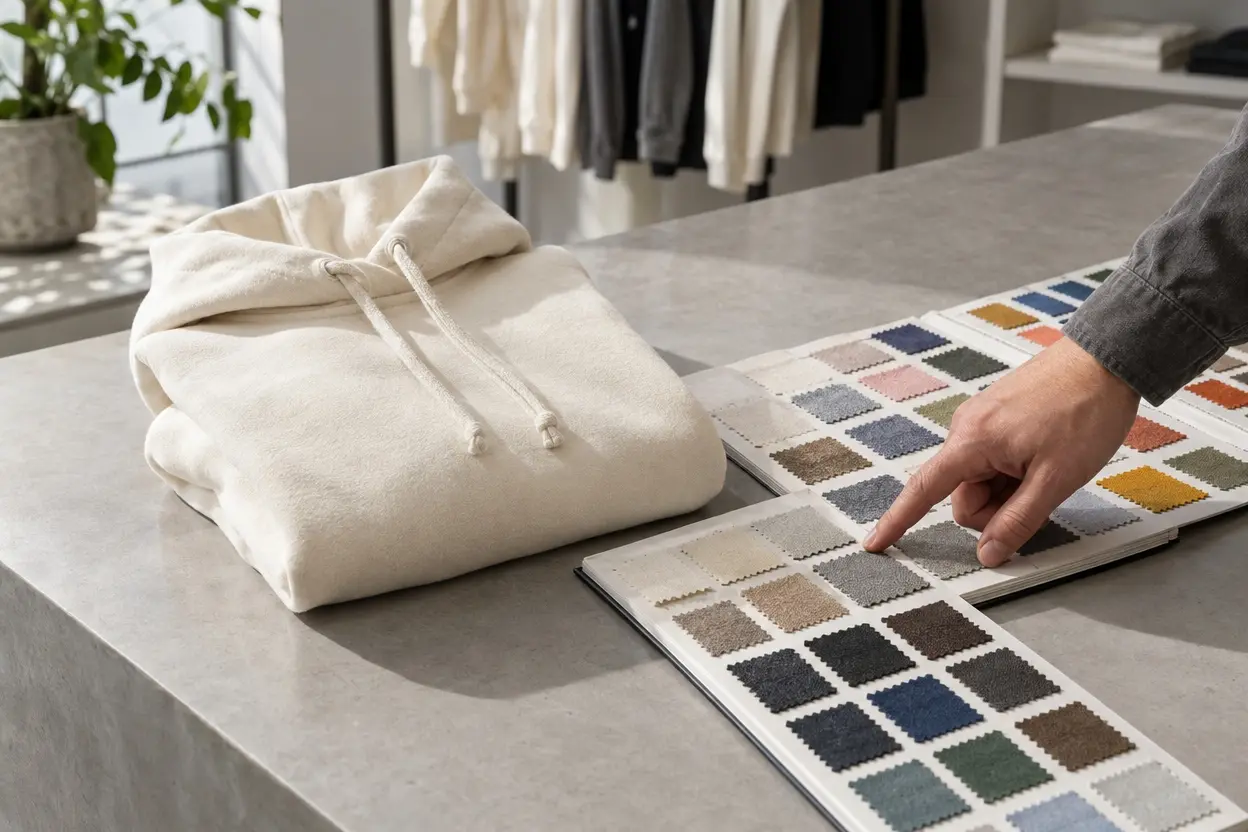
This is also what makes colour consistency manageable. A lot reference tells you whether two deliveries were cut from the same dye lot, which is the most common reason two orders look slightly different side by side.

Labels that carry the information

Traceability reaches the customer through the garment itself. Typical carriers are a woven or printed main label, a care and composition label, a size label and a hangtag with a barcode. Together they carry brand, composition, care, size, style reference and an identifier you can scan.

Fibre composition labelling has legal requirements in the European market, and the wording must match the real content. We check the composition on your labels against the fabric specification and flag any mismatch before printing. If you sell across several countries, tell us the markets so language and care symbols can be planned together.

See the garment before you commit.

Order a physical sample in your fabric and fit. Bulk production starts only after you approve it.

Certified and recycled materials need documents, not trust

A claim that a garment is organic or recycled is only as strong as the paper behind it. For certified materials the chain normally includes the certificate of each stage holder and a transaction document for the specific shipment. For recycled content it includes evidence of the input material and the conversion.

If you want to make such a claim, say so at the start. We will tell you what documents exist, what is missing and whether the claim is possible for your style. We never add a certification mark to a garment unless the documents for that lot support it. Our certifications page explains how to read these documents.

Stock items and their records

Ready-stock garments held at our German warehouse are finished goods, and their records are product level: style, composition, care, size and batch where available. Documents for a specific style, such as test reports, are requested style by style. If a document matters to your decision, ask before you reserve quantity, and we will tell you what exists for that style.

Stock availability changes as pieces are sold, which is why live quantities are shown on the stock page and why a written quote confirms what is available for your order.

Supply chain visibility and due diligence

Traceability is also the foundation of supply chain due diligence. New rules in the European market are pushing brands to know more about their suppliers and to document how risks are managed. A buyer who can show a clear record from product to material is better placed to answer.

Our due diligence page explains the questions regulators and retailers are likely to ask. If you have a supplier questionnaire, send it before ordering. We will answer what we can document and say plainly what we cannot, so that your own file stays accurate.

Agree the right level before the order

Tell us what you need to be able to prove: composition only, lot traceability, or a certified chain. We will confirm in writing what we can support and what extra steps are needed. A written specification and an approved sample are the start of a traceable order, and both cost nothing to begin with a quote.

Talk to us

Tell us what you need

Two lines are enough to start. A person on our team reads every message and replies in writing. We reply in writing within 24 hours.

Need to give quantities and a product category? Request a quote

Send us your brief. Get a clear answer.

Quantity, fabric, decoration and timeline. We confirm in writing what is possible, what it costs per piece and when it ships.