Company

Sustainability.

Sustainability

Where materials are certified organic or recycled, that is stated with the certificate reference, never as an unverified claim; see the certifications page and the relevant material pages.

Certified materials
See Certifications and the relevant material page

In detail

  1. 01

Production from

50 pieces per style

Every quote

Written, priced per piece

Before bulk

You approve a sample

Sustainability claims need evidence, not adjectives

Few topics in clothing attract as many vague words as sustainability. Green, conscious, eco and responsible appear on labels with nothing behind them. Buyers have learned to be sceptical, and regulators are increasingly asking suppliers to prove what they say.

A useful approach is to treat sustainability as a set of specific, checkable choices: which fibre, which dye process, which finishing, how much waste, how a garment lasts and what happens to it afterwards. Each can be described plainly, and some can be documented.

This page explains where the real levers are in clothing, and how we handle claims, so you can decide what matters for your range.
Have a design or an idea?

Send it and get a written quote.

Request a quote

The biggest lever: a garment that lasts

The most sustainable garment is often the one that stays in use. A t-shirt that loses its shape after five washes is replaced, with all the resources that go into the replacement. A jacket that is worn for years is made once.

That is why quality and sustainability are closer than they look. Fabric weight, construction, seam strength, shrinkage control and colour fastness all decide how long a garment lasts. Good fit decides whether it is worn at all.

Fibre choices and what they change

Fibre is where many sustainability discussions begin, and the honest answer is that every fibre has trade-offs.

  • Cotton is breathable and comfortable, and its footprint depends heavily on how it is grown. Organic cotton is certified against farming criteria.
  • Polyester is durable and quick drying, and it is made from fossil raw material unless it is recycled.
  • Recycled polyester uses existing material, such as bottles, instead of new raw material, and it needs documentation to support the claim.
  • Blends can improve durability but make recycling harder at the end of life.

The right choice depends on the product and its use. We describe the options on our material pages and help you choose the fibre that suits the garment.

Dyeing, finishing and chemicals

Colour and finishing use water, energy and chemicals, and they are among the processes buyers hear least about.

Some decisions are simple to state: fewer colours means less dyeing, a pre-treated fabric needs less correction, and a finish that is not needed does not have to be applied. Others require documentation, such as a test for restricted substances.

If your customers require limits on certain chemicals, tell us at the start. We confirm in writing whether the specification can meet them, and we coordinate laboratory testing where a report is needed. We would rather say what we can document than imply more.

See the garment before you commit.

Order a physical sample in your fabric and fit. Bulk production starts only after you approve it.

Waste, off-cuts and right-sizing orders

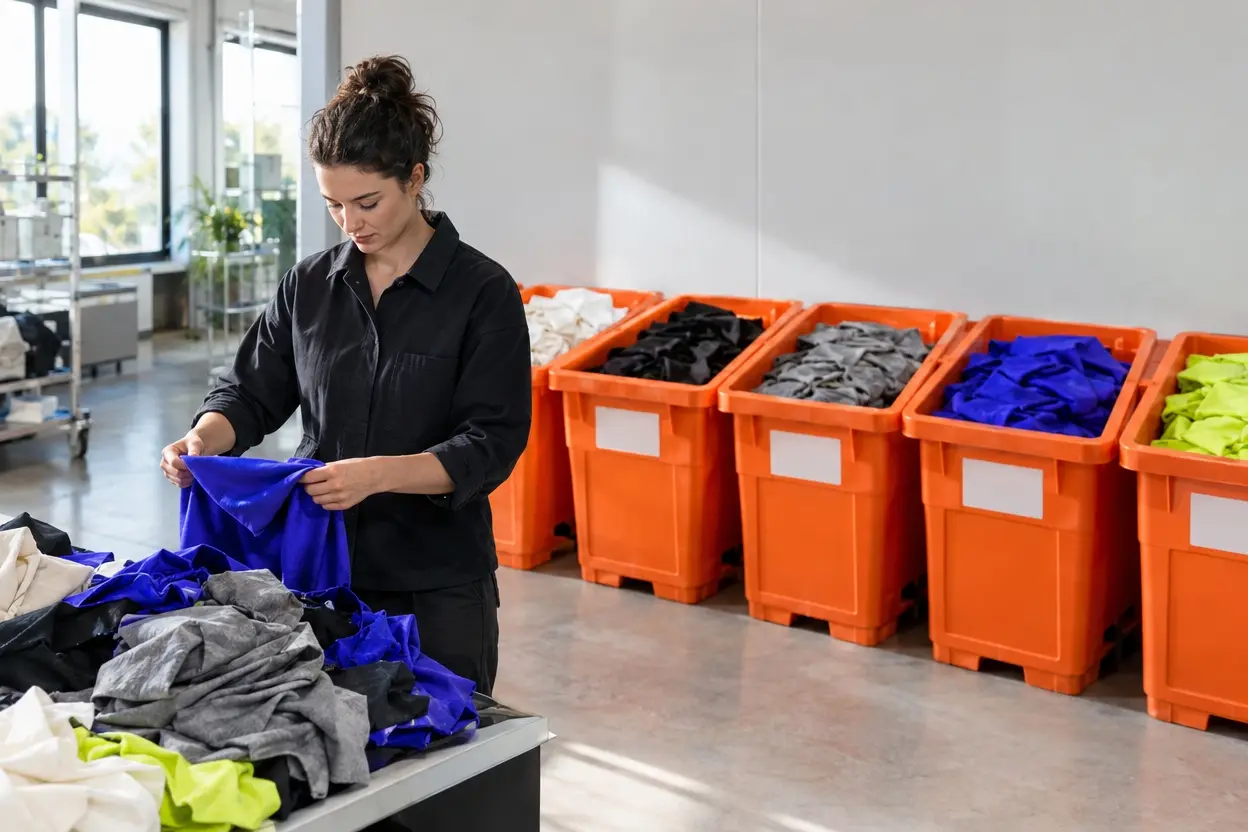
Waste in clothing arises in two places: in making, from fabric off-cuts and rejected garments, and in selling, from stock that never sells.

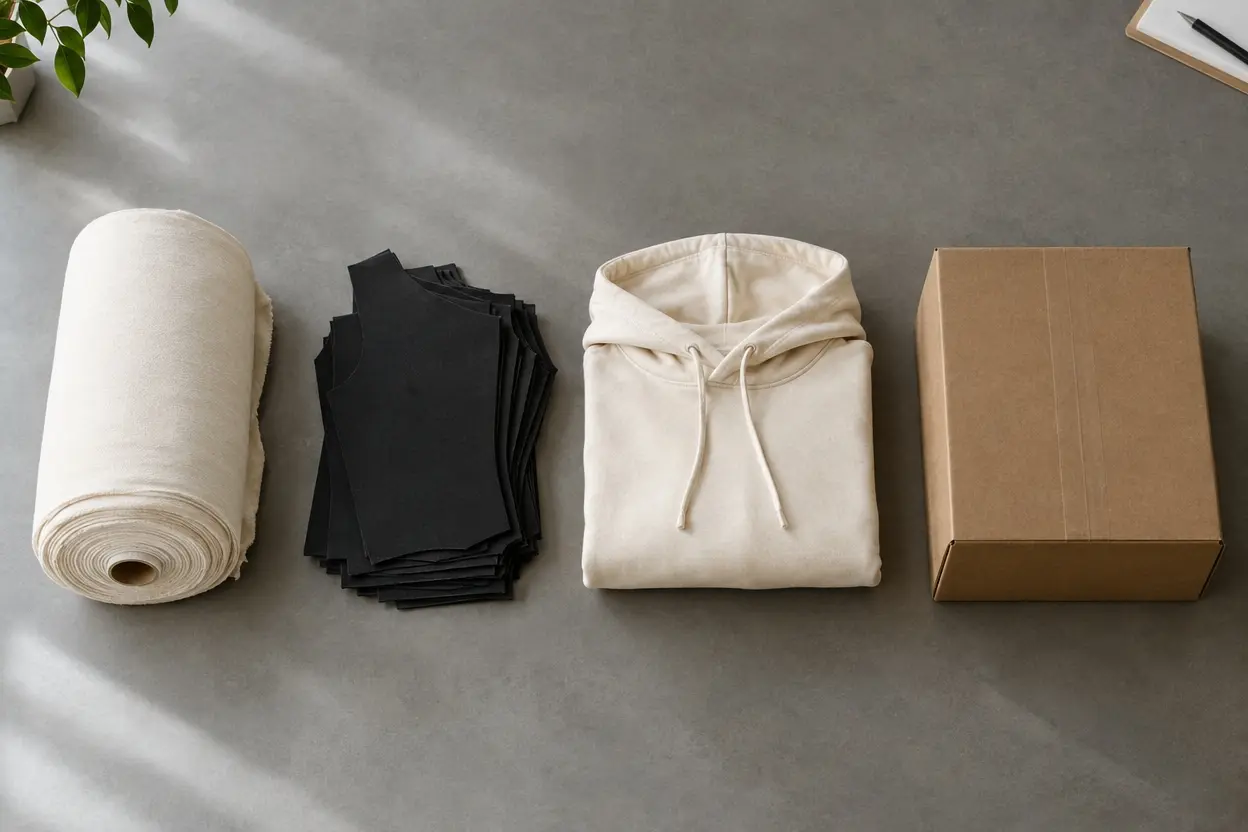
Better pattern planning reduces off-cuts. Clear specifications and approved samples reduce rejected garments, because problems are found on one sample and not on a whole run. And ordering a quantity that matches demand reduces unsold stock, which is one reason we begin from 50 pieces per style and offer ready stock from 1 piece.

A small first run followed by a reorder is often more sustainable than a large run that sits in a warehouse.

How we state sustainability claims

Where materials are certified organic or recycled, we state that with the certificate reference, never as an unverified claim. See the certifications page and the relevant material pages.

We do not use sustainability words as decoration. If we cannot document a claim, we do not make it. If you need a particular claim for your own marketing, ask us which documents exist, and we will tell you plainly what supports it and what does not.

This matters for you too. Retailers and regulators increasingly expect claims to be substantiated, and a claim you cannot support is a risk to your brand.

End of life and designing for reuse

What happens to a garment after use is part of its footprint. Fibre blends, trims and decoration affect whether a garment can be recycled or reused.

A single-fibre garment with minimal trims is easier to recycle. A uniform or workwear garment that is designed to be repaired, or to be reissued, lasts longer. A garment with removable labels can be reused more easily. These are design decisions, and they should be made at the start.

If end-of-life is part of your brief, tell us and we will discuss what is realistic for the fabric and construction you have in mind.

Start with a specific question

Sustainability conversations work well when they begin with a specific question: which fibre, which certificate, which test, which quantity. Send us what you need to document for your customers or your own claims, and we will confirm in writing what we can support.

A quote and a sample are small, reversible steps that give you real information about fabric and finish before any bulk decision.

Talk to us

Tell us what you need

Two lines are enough to start. A person on our team reads every message and replies in writing. We reply in writing within 24 hours.

Need to give quantities and a product category? Request a quote

Send us your brief. Get a clear answer.

Quantity, fabric, decoration and timeline. We confirm in writing what is possible, what it costs per piece and when it ships.