









insights
Understanding minimum order quantity
What actually sets a manufacturer's MOQ, and which decisions move it up or down.
2026-09-28
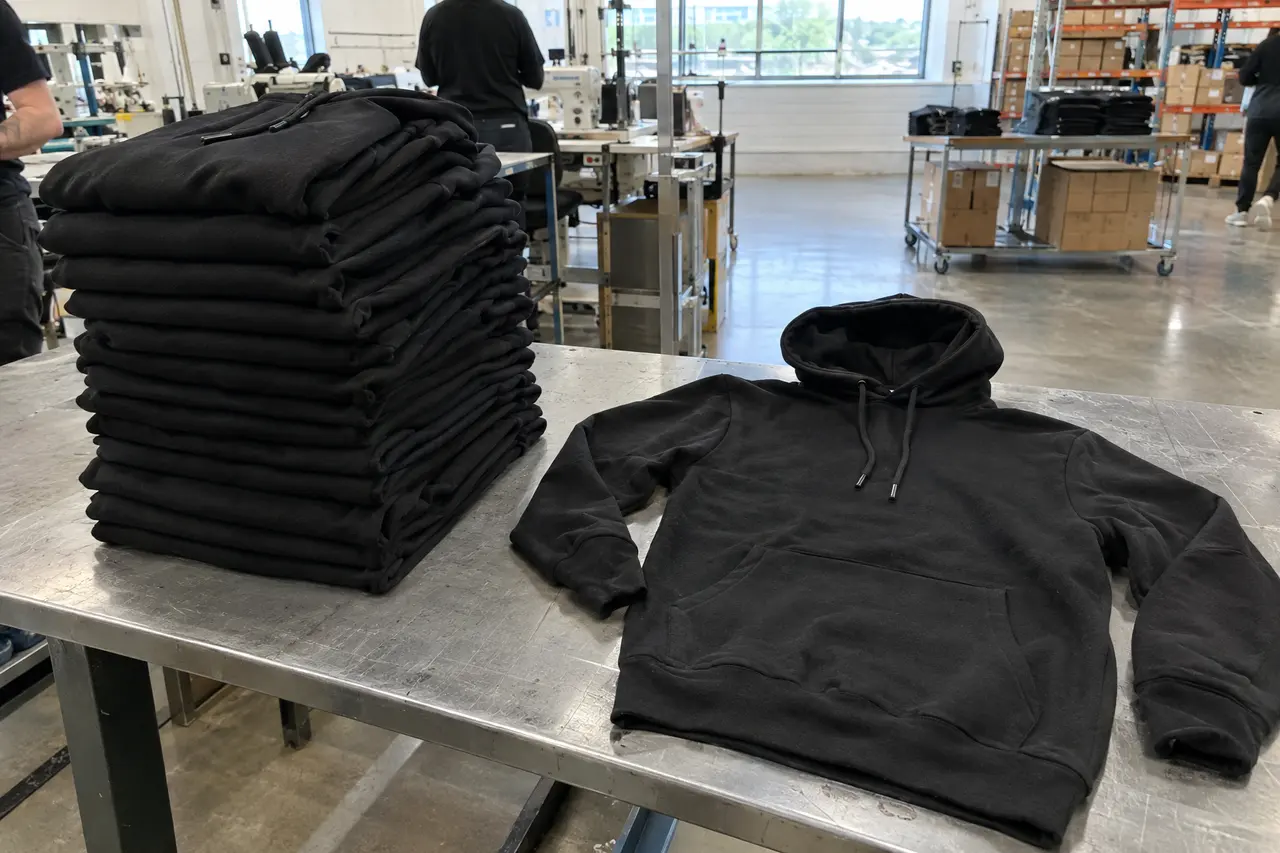
A minimum order quantity is not an arbitrary gate. It reflects the smallest batch a specific process can run without the fixed costs making the unit price impractical.
Fabric availability is usually the biggest single factor. A fabric already in a mill's stock program has a far lower minimum than a fabric that must be woven or knitted to order, which typically has its own MOQ in kilograms regardless of how many garments that becomes.
Colour count multiplies minimums rather than adding to them. Screen printing needs a separate screen per colour; a custom-dyed fabric needs a separate dye lot per colourway. Three colourways of one style is not the same order as one colourway three times over.
Construction matters too: a simple cut and sew t-shirt has a lower practical minimum than a seamless knit piece, because seamless production is set up per style on a knitting machine rather than cut from yard goods.
Decoration method interacts with all of the above: DTG and DTF have no meaningful setup cost and work from one piece, while screen printing and embroidery digitising have setup costs best spread over a larger run.
Packaging can set its own minimum separately, since printed polybags or branded boxes are usually ordered in a print run of their own.
Stock is the exception to all of this: since the garment already exists, the only floor is 1 piece, up to whatever quantity remains in the warehouse.