






Guide
The clothing sampling process: from first sample to approval
A sample is the point where your design becomes a real garment you can hold, try on and measure. This guide explains each step from first prototype to a written approval.
2026-10-30
Short answer
The clothing sample development process turns your brief into a physical garment you can hold, try on and measure before any bulk fabric is cut. It normally runs from a first prototype, to a fit sample, to corrections, to one approved sample that becomes the reference for production. Most projects need more than one round, and that is normal. At Daylo Casuals you approve a physical sample before bulk production starts.
The work happens in sample development, and the rest of this guide walks through it in the order it happens, so you know what to prepare and what to check at each point.
Step one: the first prototype
The first prototype is the earliest physical version of your idea. Think of it as a question put into fabric. Its job is to give you something real to react to, because most design problems are invisible on a screen and obvious in the hand.
What should a sampling brief include?
The prototype is built from your brief. A useful brief has a technical drawing or reference photos, the fabric you want, the colour, the size you want to fit first, and any details such as pockets, hoods, cuffs, prints or embroidery. If you are unsure how to put the drawing and measurements together, the guide to what a tech pack is shows the usual format.
You do not need a perfect document to start. Clear reference photos, measurements from a garment you like and a short written description are enough for a first round.
What does the first prototype tell you?
It answers whether the pattern reads the way you imagined, whether the fabric hangs or stands the way you expected, and whether the construction is realistic. For a new shape, the pattern making behind the prototype is where most of the early learning happens.
The first prototype is rarely perfect, and it is not meant to be. Judge it by whether the direction is right, not by whether every detail is final.
Step two: the fit sample
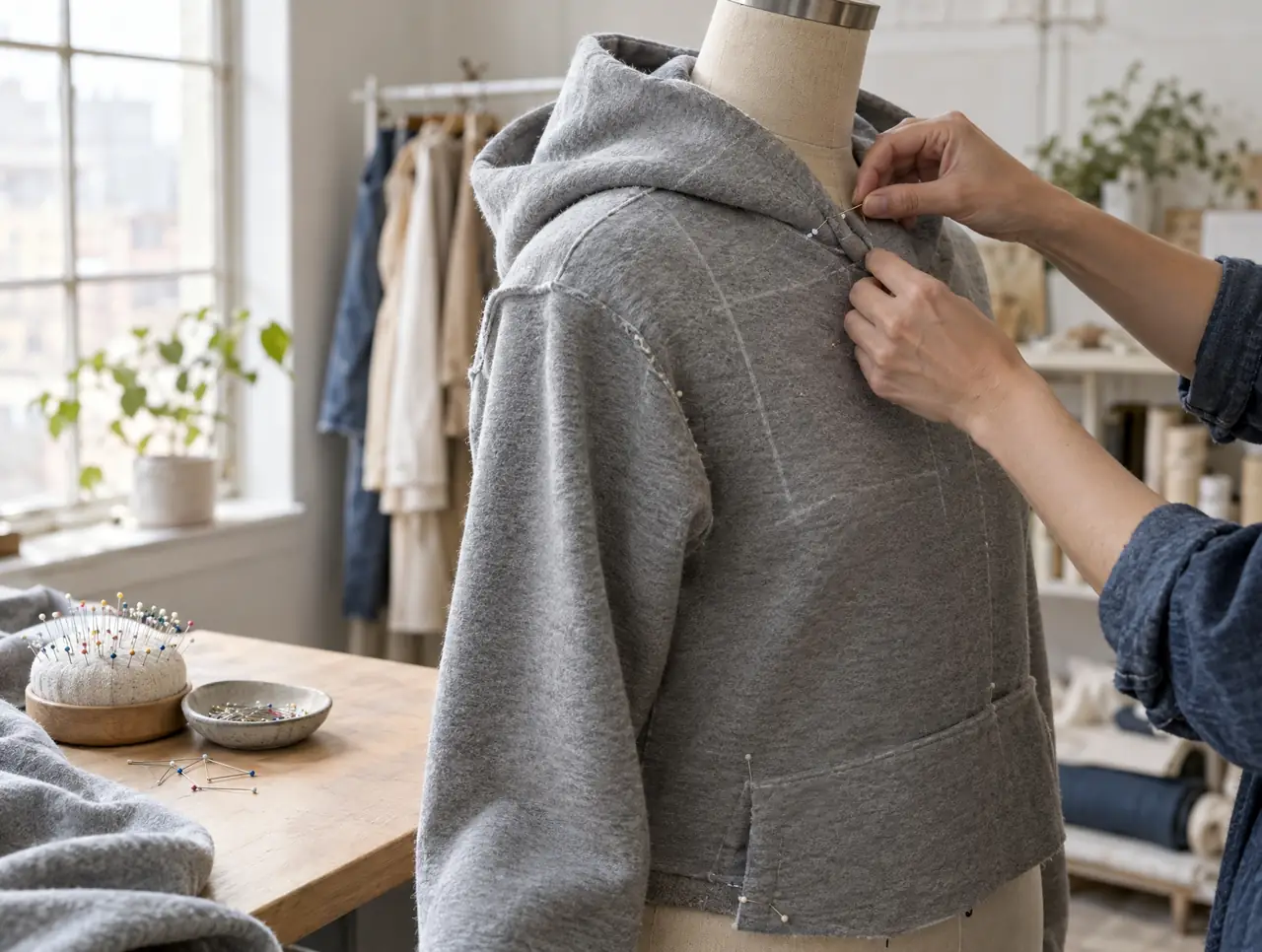
Once the prototype shows the style is right, the work moves to fit. A fit sample is checked on a body or a mannequin and against the measurement chart you have agreed.
How is a fit sample checked?
You look at shoulder line, sleeve length, body length, chest and hem width, rise on trousers, and how the garment moves when you raise your arms or sit down. Wearing the sample for a few minutes tells you more than measuring it on a table.
Why does the base size matter so much?
If you are making several sizes, the fit sample is usually made in one base size. Other sizes are then graded from it. This is why the base size needs your full attention: small errors in the base size repeat in every size above and below it.
Step three: corrections
Corrections are the written list of changes between the sample you hold and the garment you want. The corrected sample then comes back to you, and you check both that the changes were made and that nothing else moved.
How do you write useful corrections?
Good feedback is specific. Write sleeve 2 cm shorter or lower the pocket opening, rather than feels a bit long. Photos with notes drawn on them help a great deal.
Collect all your comments in one message instead of sending them piece by piece. Every change affects the pattern, and changes made in isolation can contradict each other.
What to check on every sample
Use the same checklist on every round, so you can see what has improved and what has not.
How do you check measurements?
Lay the garment flat and measure it against your chart at every key point, then compare. Note the difference between the number on paper and the number on the table, and agree what tolerance is acceptable.
How do you check fabric and colour?
Check weight, handle, stretch, recovery and surface. Wash and dry a sample the way your customer will, then measure again to see shrinkage and twisting. If the fabric is not yet settled, look at the options in material sourcing before the next round.
View colour in daylight and under shop lighting, and compare it against your reference. Screens and printed swatches rarely agree with each other.
How do you check stitching, labels and trims?
Look at seam straightness, stitch density, thread colour, reinforcement at stress points such as pocket corners and underarms, and how clean the inside finish is. These are the same points a later quality check will use against the approved sample.
Check the main label, care label, size label, hangtag, zips, drawcords and buttons for placement, spelling, size and quality. If you are still choosing between woven, printed or embroidered labels, see labels and hangtags compared.
How many rounds are normal
Plan for two to three sample rounds on a new style. A simple t-shirt in a fabric the maker already works with may be approved sooner. A structured item such as a leather jacket, a denim style with special washes, or a uniform with many pieces can take longer, because there is more to get right.
Do more sample rounds mean something is wrong?
More rounds are not a sign that something has gone wrong. They are a sign that the details are being taken seriously. What matters is that each round is shorter than the last, with fewer and smaller corrections.
When should you stop and revisit the brief?
If the list of changes keeps growing, stop and revisit the brief rather than continue sampling. Each round also adds calendar time, which the production lead times guide explains stage by stage.
Why the approved sample is the reference for bulk
The approved sample is the single physical standard that bulk production is judged against. When the production run is checked, the question is not whether the garments look nice, but whether they match the approved sample and its measurement chart within the agreed tolerance.
This protects both sides. You know what you are going to receive, and the maker knows what they are expected to deliver. Without a clear reference, a disagreement about colour or fit has nothing to be settled against.
Why approval should be written
A spoken yes or a thumbs up on a chat is easy to misremember. A written approval names the exact sample, the date, the measurement chart, the fabric, the colour reference, the labels and the decoration, so everyone is working from the same record.
Written approval should also state any open points, such as a small change that will be made in bulk without a new sample. Keep the approved sample itself, labelled and stored, because it is the reference you will return to if a question comes up later. At Daylo Casuals every quote is written and priced per piece, and the same discipline applies to sample approval.
Frequently asked questions
How long does the clothing sample development process take?
It depends on the style, the fabric and how quickly feedback moves between you and the maker. A simple style may need fewer rounds than a complex one. Sampling time is discussed in your written quote, and quick, specific feedback is the easiest way to shorten it.
Can I skip sampling and go straight to bulk?
It is not advisable for a new style. Without an approved sample there is no reference for bulk production, and problems with fit, colour or construction are only found after the whole run is made.
What if the bulk does not match the approved sample?
Compare the bulk garments with the approved sample and the signed measurement chart, and report the differences in writing with photos and measurements. This is exactly why a physical reference and written approval matter.
Do I need a technical drawing to start?
A technical drawing helps, but clear reference photos, measurements from a garment you like and a short written description are enough to begin. The first prototype will show what still needs defining.
If you are ready to develop a style, send us a written brief and we will reply in writing within 24 hours with a quote priced per piece. If you need garments sooner, ready stock is available from 1 piece and ships from our German warehouse.
Request a quote · Browse ready stock · See the designs we make