







Guide
Private label vs white label vs custom clothing: what is the difference?
The three terms are often mixed up. This guide defines private label, white label and custom clothing, and shows who each one suits.
2026-10-30
Short answer
White label means an existing design from a maker that you sell under your own name. Private label means a product made for you, usually based on a maker's pattern or base styles with changes you choose, carrying only your brand. Custom means a design developed from your own brief, with your pattern, fabric and details. The more custom the garment, the more control you have, and the more sampling and planning it needs.
White label clothing
With white label, the maker already has the garment: the pattern, the fabric and the construction exist. You choose from what is available, and your brand label and packaging go on it. Other brands may be selling the same base garment under their own names. Daylo Casuals describes this route on its white label manufacturing page.
Who is white label clothing for?
This route is the simplest and quickest. It suits new brands that want to test a market, teams that need branded basics, or a business adding a simple product to an existing range.
What is the trade-off of white label?
You do not own the design, so your product can look much like others on the market. An example is a plain heavyweight t-shirt in a standard cut, with your label sewn in. A t-shirt is the usual starting point because the garment is simple and the cut is familiar.
Private label clothing
Private label sits in the middle. The maker's base pattern or style is the starting point, and you adjust it: your fabric choice, your colours, a different length, a pocket detail, your own trims, labels and packaging. The finished garment is made only for you and carries only your brand. The details are on the private label manufacturing page.
Who is private label clothing for?
It suits brands that want something recognisably their own without developing everything from scratch. Sampling is shorter than for a fully custom garment because the foundation is already proven.
What does a private label hoodie look like in practice?
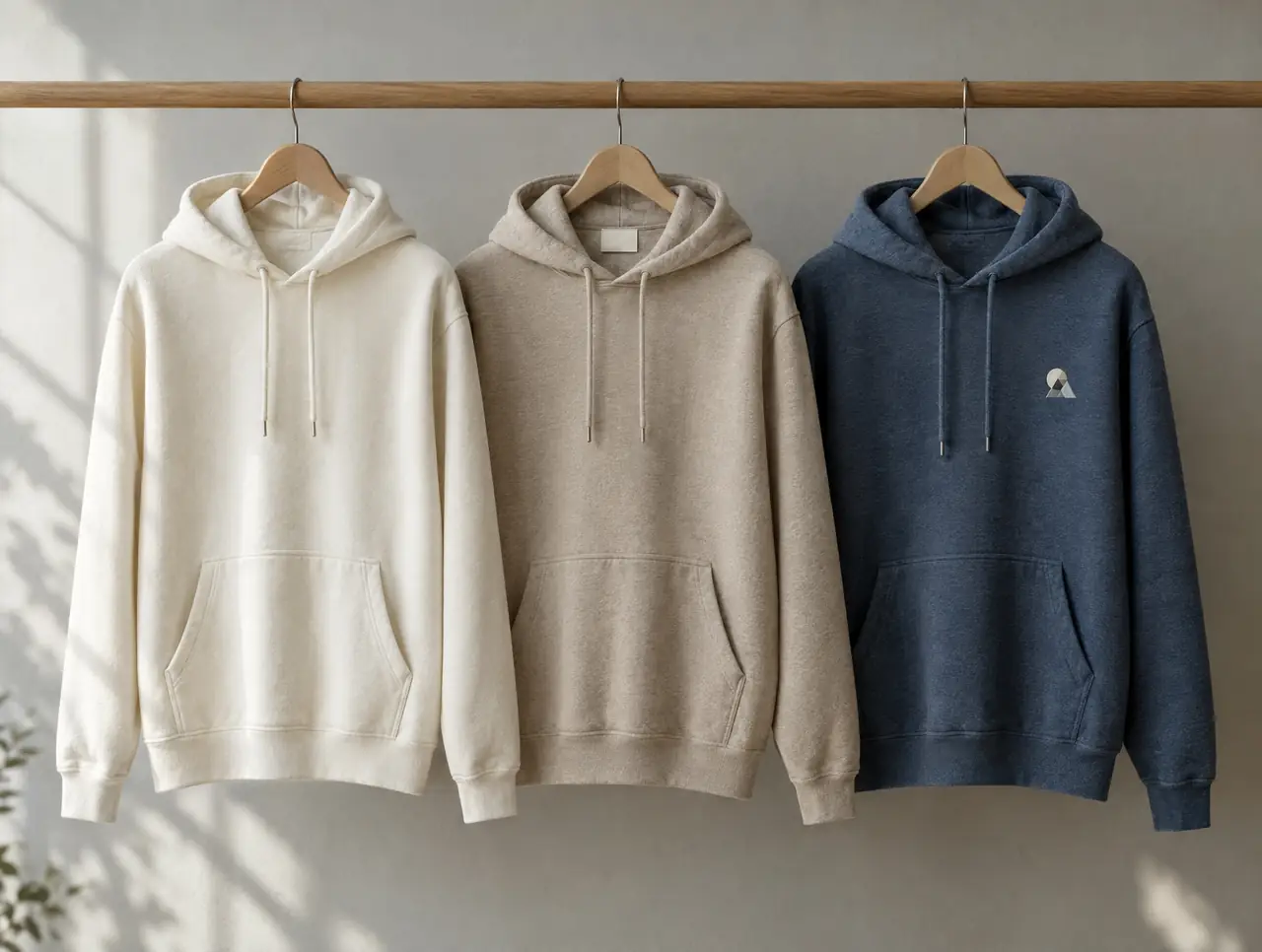
A hoodie is a good example. You may keep a base block, then choose the fabric weight, the colour, the hood shape, the cuff and hem finish, and add embroidery. Fabric is the biggest lever here, and the guide to hoodie fabric, GSM, fleece and French terry helps you choose before you brief.
Custom clothing
Custom means the garment is developed from your brief. You supply a technical drawing, reference garments or detailed measurements, and the pattern is made or adapted to match. Fabric, stitching, washes, labels and fit are all specified by you. This is the scope of custom manufacturing.
Who is custom clothing for?
It suits established brands, designers with a clear idea, and companies that need uniforms, teamwear or workwear built around specific requirements.
What are examples of custom garments?
A boxy t-shirt with a particular neckline and a custom knit rib, or a hoodie with unusual panelling, are typical examples. Custom needs more sampling, more decisions from you, and normally takes longer to bring to approval than the other two routes.
Control, minimums and branding compared
Design control rises from white label to private label to custom. With white label you choose among finished options, with private label you modify, and with custom you define. Minimums often follow the same pattern, because the more of a garment that is new, the more setup is involved.
What are the minimum order quantities?
At Daylo Casuals, selected custom, private label and white label projects start from 50 pieces per style, subject to technical review. The reasoning behind minimums is covered in the guide to clothing minimum order quantities.
Can you brand the garment in all three routes?
Branding works across all three: woven or printed neck labels, care labels, size labels, hangtags and packaging can be specified in each. The difference is how far the garment itself is yours. Every quote is written and priced per piece.
Risks to understand
Each route carries a different kind of risk, and it is better to know it before you commit. None of these risks is a reason to avoid a route. They are points to plan for, ask about and settle in writing before production starts, so that the garment you receive is the garment you expected.
What are the risks of white label?
White label risks are sameness and dependence. If the base style is available to others, you compete on branding and service rather than design. Check what the maker can promise about exclusivity, and get it in writing.
What are the risks of private label and custom?
Private label and custom risks are about time and decisions. More changes mean more sample rounds, and mistakes in a drawing or measurement chart carry into bulk if they are not caught. Custom work also asks you to commit to a quantity before you know how the market will respond. Approving a physical sample in writing before production starts is your main protection in every case.
Which one suits you
Choose white label if you want to start quickly, test demand and keep decisions few. Choose private label if you want your own fabric, colour and details but do not need a new pattern. Choose custom if the design is the core of your brand, or if a uniform or product line has requirements that standard patterns cannot meet.
Many brands move through the stages: a white label t-shirt first, a private label hoodie next, and a custom signature piece once the brand is established. If you only need a few pieces now, ready stock from 1 piece is a separate option to consider. If you are still weighing makers as well as routes, see how to choose a clothing manufacturer.
Frequently asked questions
Is private label the same as white label?
No. White label is an existing product relabelled with your brand. Private label is made for you, with changes you choose, and carries only your brand.
Can I sell white label hoodies under my own brand?
Yes, that is the point of white label. Your label and packaging go on an existing hoodie. Ask whether the same base style is also offered to other brands.
Do I need a technical drawing for custom clothing?
It helps, but reference photos, a garment to copy and a measurement chart can also work. The first prototype shows what still needs defining.
What is the minimum order?
Selected custom, private label and white label projects start from 50 pieces per style, subject to technical review. Ready stock is available from 1 piece.
Send us a brief describing which route you are considering and we will reply in writing within 24 hours with a quote priced per piece. If you want to see the garments first, ready stock is available from 1 piece.
Request a quote · Browse ready stock · See the designs we make