









Guide
Hoodie fabric guide: GSM, fleece and French terry
GSM tells you how heavy a fabric is, but not how it feels or wears. This guide explains GSM, fleece, French terry and blends so you can choose with confidence.
2026-10-30
Short answer
GSM means grams per square metre, and it measures fabric weight. Light hoodies are often around 180 to 250 GSM, mid weight around 250 to 320, and heavyweight above that. Fleece is brushed on the inside for warmth and softness, French terry has soft loops inside, and the right choice depends on how the hoodie will be worn and washed.
If you are planning a hoodie range, the fabric decision comes before almost everything else, because it affects fit, price discussions, print results and shipping volume. Our hoodie manufacturing page shows how the rest of the process fits around it.
What GSM actually tells you
GSM is the weight of one square metre of fabric, measured in grams. A higher number means more material per square metre, which usually means a thicker, warmer and more substantial feel. It does not tell you the quality on its own.
Why can two hoodies with the same GSM feel different?
Yarn type, how tightly the fabric is knitted and how it is finished all change the result. Treat GSM as a starting point for a conversation, and then judge the fabric by handling it.
Ranges also vary by supplier and by how a weight is measured, so the groupings here are general industry ideas, not fixed rules.
Light, mid and heavyweight
Weight groups are a quick way to describe a hoodie to a supplier. Each one has a different character and suits a different use.
Lightweight hoodies: 180 to 250 GSM
Lightweight hoodies are suited to spring, layering, warm climates and activewear. They drape easily and are comfortable indoors, but they offer less warmth and can look thin once washed.
Mid weight hoodies: 250 to 320 GSM
Mid weight is a common range for everyday hoodies. It balances warmth, comfort and cost of materials, and works for many brands. It is also a safe starting point if you are making a first sample and are unsure which direction to take.
Heavyweight hoodies: above 320 GSM
Heavyweight fabric gives a thick, structured feel with a boxy shape that holds its form. It is warmer and more durable, but it can feel stiff at first and is bulkier to pack and ship.
Brushed fleece versus French terry
These are the two knits most hoodies are made from, and they behave differently on the body.
What is brushed fleece?
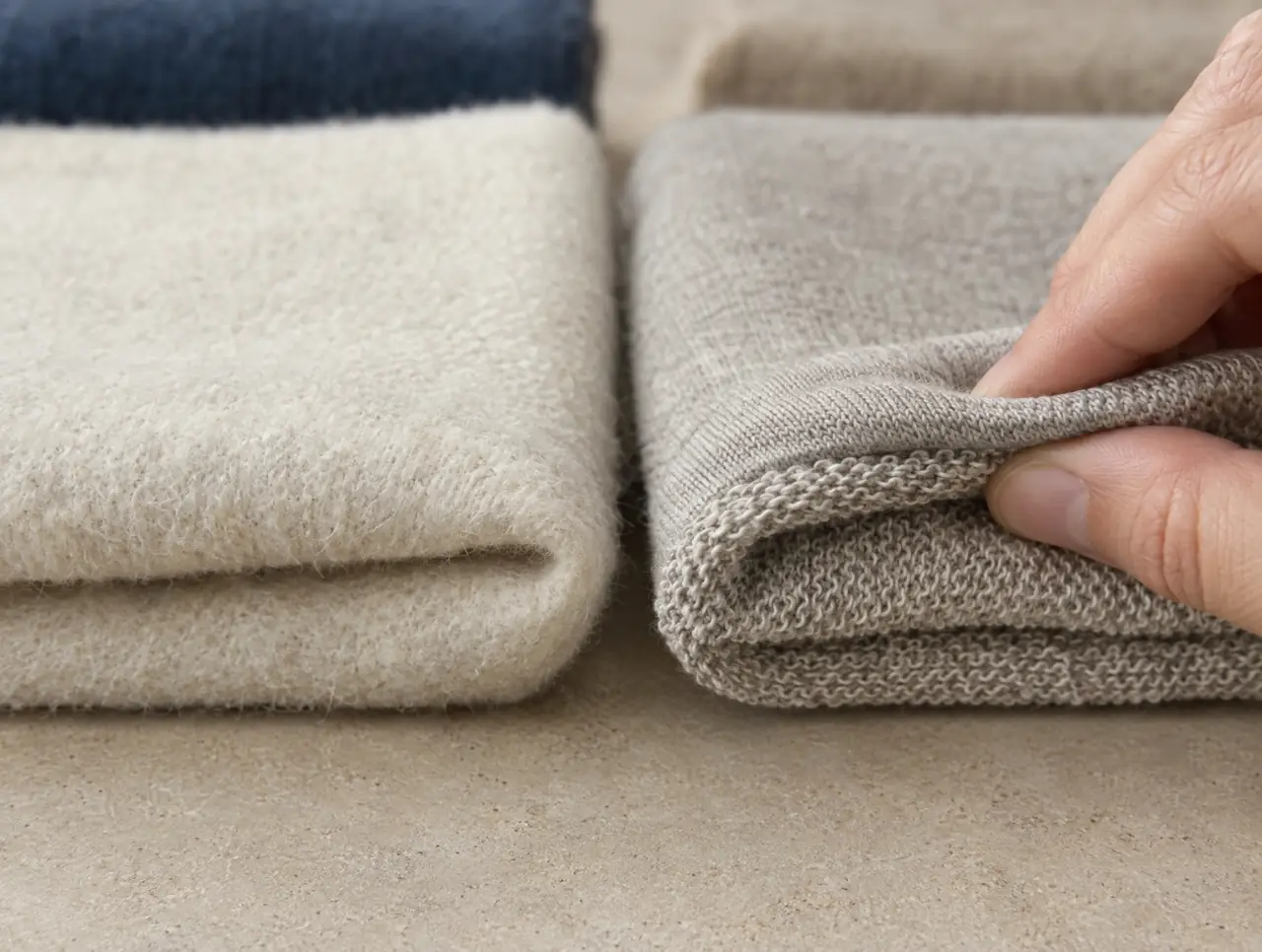
Brushed fleece has a flat outer face and an inside that has been brushed to raise a soft, fluffy pile. It traps air, so it is warm and cosy, and it suits cold weather and a classic hoodie feel.
What is French terry?
French terry has a smooth face and small unbrushed loops on the inside. It is lighter for its weight, absorbs moisture well and breathes better, which makes it a good choice for spring, autumn and warmer climates. Many people find it more comfortable against the skin for all day wear.
Which should I choose?
A simple rule: if warmth is the priority, choose fleece. If breathability and a cleaner drape matter more, choose French terry. If you cannot decide, request a sample of each in the same colour and compare them side by side.
Cotton versus cotton and polyester blends
Fibre content changes how a hoodie feels, washes and prints, so it deserves as much attention as weight.
What are the strengths of 100 percent cotton?
One hundred percent cotton feels natural, breathes well and takes dye and prints nicely. It is also more likely to shrink and to hold creases, and it can lose shape over time.
What do polyester blends change?
Blends of cotton and polyester usually shrink less, dry faster, keep their shape and resist wrinkling. The cost is slightly less breathability, and polyester blends can be more prone to pilling.
A common mix is mostly cotton with a smaller share of polyester, which keeps the cotton feel while adding stability. Ask for the exact fibre composition in writing, since a small change in the blend can change how the garment behaves.
Shrinkage and pilling
Two faults cause most complaints about hoodies: a garment that changes size in the wash, and a surface that bobbles with wear. Both can be judged before you commit to bulk.
How much will a hoodie shrink?
Shrinkage depends on the fibre, the knit and whether the fabric was pre-treated. Cotton shrinks more than blends, and the first wash is where most of it happens. Ask whether the fabric is pre-shrunk, and ask for the shrinkage result after washing so you can plan your sizing.
Why does fabric pill, and how can I limit it?
Pilling is the small balls of fibre that form where fabric rubs, such as under the arms or on the sleeves. It depends on yarn quality, how tightly the yarn is spun and how the fabric is finished. Longer, better combed yarns generally pill less.
The only reliable way to judge it is to wash and wear a sample.
Choosing for streetwear or workwear, and what to ask for in a sample
The right fabric depends on who wears the hoodie and what happens to it afterwards.
Which fabric suits streetwear and workwear?
Streetwear usually favours heavier fabric, around the mid to heavy range, in a boxy shape that holds its structure, and fabrics that take prints, embroidery and garment dyeing well. Workwear needs durability, shrinkage control and easy washing, so a mid weight cotton and polyester blend is often a practical choice.
What should I check when a fabric sample arrives?
When you request a sample, ask for the stated GSM and fibre composition, then check them against what arrives. Wash it to the care instructions you plan to use and measure it before and after. Look at seams, cuffs, hood shape and drawcord, and rub the fabric to see how it handles friction.
Also ask how the fabric will be decorated. Heavier fleece holds embroidery well, while a smooth French terry face suits fine print detail, so tell the supplier early which decoration you plan to use. A fabric that looks right in a swatch can behave differently once a design is stitched or printed onto it.
Approve the sample in writing, so the bulk can be compared against it. The clothing sampling process guide covers how approval rounds work.
Frequently asked questions
What GSM should I choose for a hoodie?
There is no single answer. Mid weight, roughly 250 to 320 GSM, suits most everyday use, while heavier fabric suits a structured streetwear look and lighter fabric suits warm weather and layering.
Is French terry or fleece warmer?
Fleece is warmer because the brushed inside traps air. French terry is lighter and breathes better, so it suits milder weather.
Will my hoodie shrink?
Some shrinkage is normal, especially in cotton and in the first wash. Pre-treated fabric and cotton and polyester blends shrink less, and a washed sample will show you what to expect.
How do I reduce the chance of pilling?
Choose well spun yarns and check the fabric finish, then test a washed and worn sample. Pilling is hard to judge from a flat swatch, so wear testing matters.
To compare fabrics in person, send Daylo Casuals a brief and we will reply in writing within 24 hours with a quote priced per piece and a physical sample you approve before bulk. If you want to test a hoodie first, ready stock is available from 1 piece.
Request a quote · Browse ready stock · See the designs we make